
Loading...
Serving Brea, CA and surrounding areas. (657) 478-7348
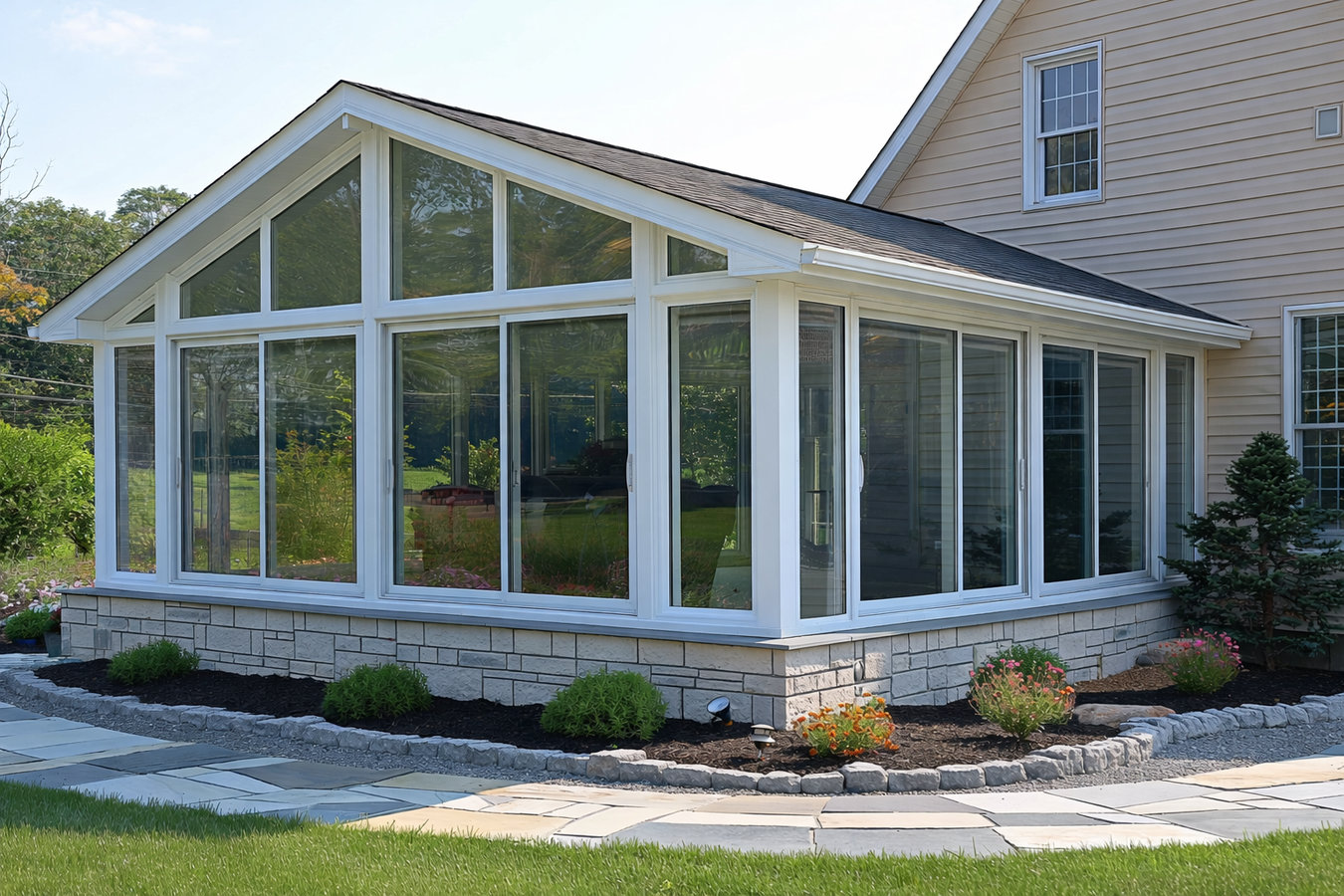
Elite Brea Sunrooms & Patios is Anaheim's local sunroom contractor, building four-season rooms, patio enclosures, and custom sunrooms for homes across the city's flat central neighborhoods and hillside Anaheim Hills communities. We have served Anaheim homeowners since 2020 and handle all permits through the city's building division, from submission to final inspection sign-off.
Anaheim's long, hot summers and intense UV exposure mean a four-season sunroom here has to be designed around cooling first. Low-E glass and a properly sized mini-split keep the room comfortable through the months when the rest of the yard bakes - whether your home is in the flat tract neighborhoods of central Anaheim or on a hillside lot in Anaheim Hills. See the full details of our four season sunrooms service.
Many Anaheim homes from the 1950s and 1960s were built with uncovered concrete slab patios that now sit exposed to the full force of Southern California's sun and the dry Santa Ana winds each fall. An enclosed patio gives you a protected room usable year-round, keeping wind-driven dust and smoke from poor air quality days outside where they belong. We assess drainage and grade before framing on any lot in the city, including on the sloped properties common in Anaheim Hills.
Anaheim Hills is a distinct community within the larger city, with bigger lots, hillside terrain, and homes built mostly from the 1970s through the 1990s. A home there often has a specific view, a particular roofline, and HOA requirements that a standard catalog design will not accommodate. A custom sunroom is designed around your property's conditions from the first sketch - proportions, materials, and roofline all matched to what you already have.
Homes in central and west Anaheim were built primarily from the late 1940s through the 1960s, and many have original floor plans with modest square footage. A permitted sunroom addition is one of the most practical ways to add a room to these homes - whether you need a home office, a playroom, or a bright space with a connection to the yard. Getting the permits right is essential in Anaheim; we handle that process from submission through final inspection.
Anaheim's mild fall and spring seasons - cooler than summer but warm enough to sit outside without a coat - are ideal for a three-season room. This option costs less than a fully climate-controlled four-season room and gives you an enclosed outdoor space for the majority of the year. It is a practical choice for Anaheim homeowners who want more usable space but are not ready to commit to a full addition with HVAC.
Evenings in Anaheim in spring and early summer, before the real heat arrives, are some of the most pleasant outdoor weather in Orange County. A screen room brings that evening air inside while keeping out the insects and the fine dust that Santa Ana winds carry across the city each fall. This open-air option works well on the standard suburban lots found throughout central and west Anaheim and requires less permitting than a fully enclosed addition.
Anaheim covers roughly 50 square miles and contains two housing stocks that behave very differently from a construction standpoint. Central and west Anaheim are dominated by postwar tract homes built from the late 1940s through the 1960s - single-story ranch-style houses on flat slab foundations with stucco exteriors and modest lot sizes. These homes are well understood, and sunroom work on them follows a fairly predictable pattern. Anaheim Hills, in the eastern part of the city, is a different world: larger homes built mostly in the 1970s through the 1990s, on sloped lots with retaining walls, steeper grades, and HOA architectural review processes that add steps before any exterior change can begin. A contractor who approaches Anaheim Hills the same way they approach a flat central Anaheim lot will run into problems quickly - the site conditions, the foundation requirements, and the permit documentation all differ significantly.
Beyond the terrain, Anaheim's climate creates specific material requirements that matter for every sunroom in the city. Summer temperatures regularly reach the low 90s and occasionally top 100 degrees, and the UV exposure over a long Southern California summer degrades lower-grade glazing far faster than the manufacturers' ratings suggest. Parts of the city also sit on clay-heavy soils that expand when wet and shrink during the dry season - seasonal movement that can stress slab foundations and shift framing connections in a sunroom that was not anchored to account for it. Santa Ana wind events each fall add another design requirement: frame connections and roofing details that hold up to gusts above 50 mph. These factors are not optional considerations - they are what separates a sunroom that holds up for 20 years from one that needs repair by its third winter.
Our crew works throughout Anaheim regularly, and we understand the local conditions that affect sunroom work here. We pull permits through the City of Anaheim building division and are familiar with the city's plan review process. For projects in HOA-governed communities in Anaheim Hills, we know to start the architectural review process early - those approvals typically add two to six weeks before a city permit can even be submitted, and starting both processes in the right order prevents the kind of scheduling delays that push a project into the wrong season.
Anaheim is a city of distinct neighborhoods, and the experience of working here reflects that variety. Lincoln Avenue and Ball Road run through the older central neighborhoods where the housing stock dates to the 1950s and 1960s. Katella Avenue takes you past Angel Stadium and toward the Platinum Triangle, a mixed-use area with newer construction. Head east on Santa Ana Canyon Road and the terrain rises into Anaheim Hills, where the lots are larger, the grades are steeper, and the homes were built two to four decades after the postwar tract homes that define the rest of the city. We assess each property on its own terms rather than using a city-wide average that fits neither neighborhood well.
Anaheim neighbors several communities we serve on a regular basis. Homeowners in Orange to the south share many of Anaheim's central housing characteristics - older ranch homes on flat lots with similar permit timelines at a neighboring city building department. Homeowners in Yorba Linda to the northeast deal with even more pronounced hillside terrain, and many of the considerations we apply to Anaheim Hills lots apply there as well.
We come to your Anaheim property, assess the site, and give you a written quote at no cost. For Anaheim Hills lots we evaluate grade, soil conditions, and drainage before quoting - so the estimate reflects what your property actually requires. We reply to all inquiries within 1 business day.
Once you approve the design and sign the contract, we submit the building permit application to the City of Anaheim. Plan review typically takes two to four weeks. If your property is in an HOA community, we coordinate that approval process simultaneously so neither review is waiting on the other when it clears.
Construction runs two to six weeks depending on room size, foundation conditions, and whether HVAC is included. You do not need to be home every day, but we ask for availability during the city inspection stages, which happen at defined points in the project and each take about 30 minutes.
When the city issues the final inspection approval, we walk through the completed room with you. We test all windows and doors, address any remaining finish items, and explain how the room's systems - glass, ventilation, and HVAC if applicable - perform in Anaheim's specific summer and Santa Ana wind conditions.
We serve homeowners across all of Anaheim, CA - from central neighborhoods to Anaheim Hills. Free site visit, written quote, no pressure.
(657) 478-7348Anaheim is one of the largest cities in Orange County, with about 350,000 residents spread across roughly 50 square miles. The city's modern identity is tied closely to two landmarks: the Disneyland Resort, which opened in 1955 and turned western Anaheim into one of the most visited destinations in the world, and Angel Stadium, which has been home to Major League Baseball since 1966. The Resort District in the southwest corner of the city is largely commercial, but the residential neighborhoods that surround it - and stretch across the rest of Anaheim - are where the city's homeowners live. Most of those neighborhoods were built during the postwar suburban boom, with tract development spreading steadily eastward from the 1940s through the 1970s.
The eastern portion of the city is a different experience entirely. Anaheim Hills, developed mostly from the 1970s through the 1990s, sits on rolling terrain with winding streets, larger lots, and homes that were designed for a different era and a different buyer. The contrast between a 1,200-square-foot ranch home in central Anaheim and a 2,800-square-foot two-story in Anaheim Hills captures how varied the city's housing stock really is - and why sunroom work here requires knowing which part of town you're in before making any assumptions. Nearby communities we work in regularly include Fullerton to the north, where the older housing stock closely mirrors central Anaheim, and Placentia to the northeast, a quieter suburban city that borders Anaheim Hills.
Expand your living space with a beautiful, light-filled sunroom addition.
Learn MoreConvert your existing patio into an enclosed, functional sunroom.
Learn MoreEnclose your patio for added privacy, comfort, and usable square footage.
Learn MoreCall us or fill out the contact form and we will get back to you within 1 business day. Free site visit, written quote, permits handled from start to finish.